
The Actual Price of a Poor Hire: Why Personality Forecasting Is More Crucial Than Resume Keywords
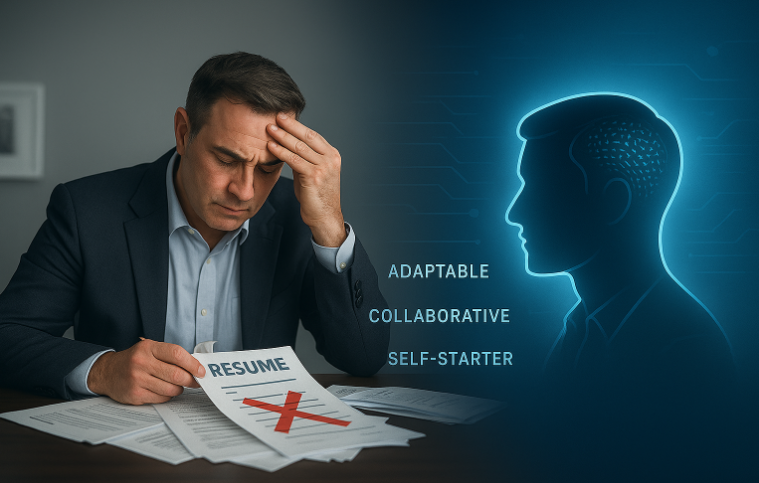
In an era where talent acquisition strategies increasingly rely on automation and keyword optimization, organizations face a paradoxical challenge: despite more efficient resume screening, bad hires remain alarmingly common. The Society for Human Resource Management (SHRM) estimates that replacing an employee costs 50–60% of their annual salary, with specialized roles exceeding 200%.
Worse, 80% of employee turnover traces back to poor hiring decisions, according to Harvard Business Review.
This article examines why traditional reliance on resume keywords fails to mitigate these costs and argues that personality forecasting—a data-driven approach to assessing behavioral traits—offers a transformative solution for modern HR teams.
The Multifaceted Cost of a Bad Hire
Financial Drain Beyond Recruitment
The direct costs of a mis-hire extend far beyond recruitment fees. The U.S. Department of Labor estimates that a poor hire costs at least 30% of the employee’s first-year earnings, a figure that escalates to 200% for leadership roles. These expenses include wasted training resources, lost productivity, and the ripple effects of disrupted workflows. For example, Zappos CEO Tony Hsieh attributed over $100 million in losses to mis-hires, underscoring how even industry leaders remain vulnerable.
Cultural and Operational Erosion
Bad hires corrode team dynamics and morale. A National Business Research Institute study found that 37% of employers reported decreased morale due to poor hires, while 18% noted damaged client relationships. These intangible costs often surpass financial losses, as disengaged employees spread frustration, stifling innovation and collaboration. As Ryan Holmes, CEO of HootSuite, observed, “One subpar employee can throw an entire department into disarray”.
The False Promise of Resume Keywords
Automated Screening’s Contextual Blind Spots
While automated resume screening accelerates candidate sorting, it lacks nuance. Keyword-based systems frequently overlook synonyms, contextual achievements, and transferable skills. For instance, a candidate describing “team leadership” as “collaborative mentorship” might be rejected by a system programmed to seek the former phrase. This rigidity excludes qualified talent, with 92% of candidates abandoning applications due to cumbersome processes.
The Myth of “Perfect” Credentials
Resumes often emphasize credentials over cultural fit. A Robert Half study revealed that 36% of failed hires stemmed from skill mismatches, while 30% resulted from unclear performance expectations. Overemphasizing keywords like “Python proficiency” or “MBA” risks prioritizing technical prowess over traits like adaptability or emotional intelligence—qualities critical for long-term success.
Personality Forecasting: A Data-Driven Antidote
The Science of Behavioral Prediction
Personality forecasting leverages psycholinguistics and predictive analytics to evaluate traits linked to job performance. The Big Five model—assessing conscientiousness, agreeableness, extroversion, neuroticism, and openness—has demonstrated robust correlations with workplace outcomes. For example, conscientiousness predicts academic and job performance (ρ = 0.19), while neuroticism inversely affects team stability.
Case Studies in Predictive Success
Companies adopting personality forecasting report measurable improvements:
- JetBlue reduced call center training attrition by 25% using assessments tailored to role-specific traits.
- Wells Fargo boosted retention for tellers and bankers by 15% and 12%, respectively, by aligning hires with cultural values.
- Zappos achieved a 97% candidate satisfaction rate by integrating behavioral assessments into pre-employment screenings.
These outcomes highlight how forecasting mitigates risks that resumes alone cannot capture.
Implementing Personality Forecasting Strategically
Integrating Assessments Holistically
Effective implementation requires blending tools like the Predictive Index (PI) Behavioral Assessment with traditional methods. For example, combining cognitive tests with trait analyses helps identify candidates who balance problem-solving skills with collaborative tendencies.
Measuring ROI Systematically
Calculating the return on personality assessments involves tracking metrics like retention rates, time-to-productivity, and manager satisfaction. Paradigm Personality’s ROI framework links assessments to tangible outcomes: a 10% reduction in turnover for a 1,000-employee company saves ~$2.6 million annually, assuming a $60,000 average salary.
Ethical and Practical Considerations
While predictive tools reduce bias, they require vigilant monitoring to avoid algorithmic discrimination. Transparency in assessment criteria and regular audits ensure fairness, fostering candidate trust and legal compliance.
Conclusion: Shifting from Credentials to Potential
The evolving talent landscape demands a paradigm shift from credential-based hiring to personality-driven forecasting. As LinkedIn data shows, top candidates remain on the market for just 10 days—far shorter than the average 23.7-day hiring cycle. Organizations that prioritize behavioral insights over keyword matching will not only reduce mis-hire costs but also build resilient, adaptive teams.
Forward-looking HR leaders should:
- Audit existing processes for overreliance on resume keywords.
- Pilot personality assessments in high-turnover roles.
- Train recruiters to interpret behavioral data alongside traditional metrics.
In the words of Laszlo Bock, former Google SVP of People Operations, “Hiring is the most important thing you do. If you get it right, everything else becomes easier.” By embracing personality forecasting, organizations transform hiring from a cost center into a strategic advantage.