
The Offer Dropout Crisis: Strategic Solutions for Modern Recruitment Challenges
In today’s talent market, “offer accepted” is no longer a guarantee. Recruiters spend weeks courting candidates only to see them vanish in the final miles. The costs are real — in time, momentum, and morale.
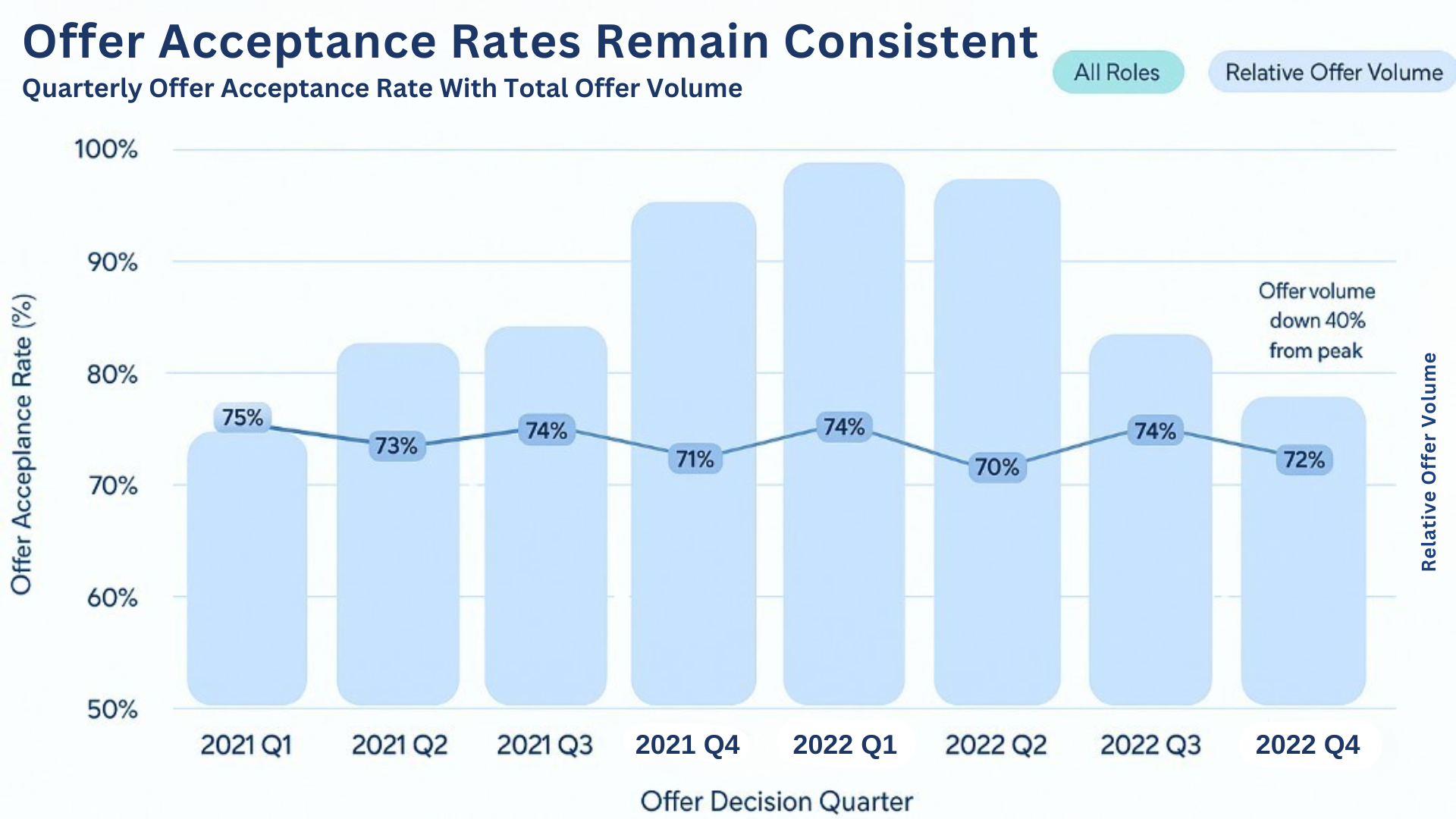
As of Q1 2025, roughly 35% of candidates back out after accepting a job offer, down from 48% in 2024. Yet the problem persists. Meanwhile, offer acceptance rates hit 81% in 2023, thanks to intense competition for talent.
Let’s dig into why this is happening — and how AI can help turn “Yes” into “On Day One.”
The Rise of Candidate Power & Volatility
Job seekers wield more leverage than ever. In Q1 2025, 44% of candidates reported juggling multiple offers, down from 72% in 2023. That plurality of options means hesitation or second-guessing is the default.
Then there’s the role factor. Technical candidates are harder to lock in.
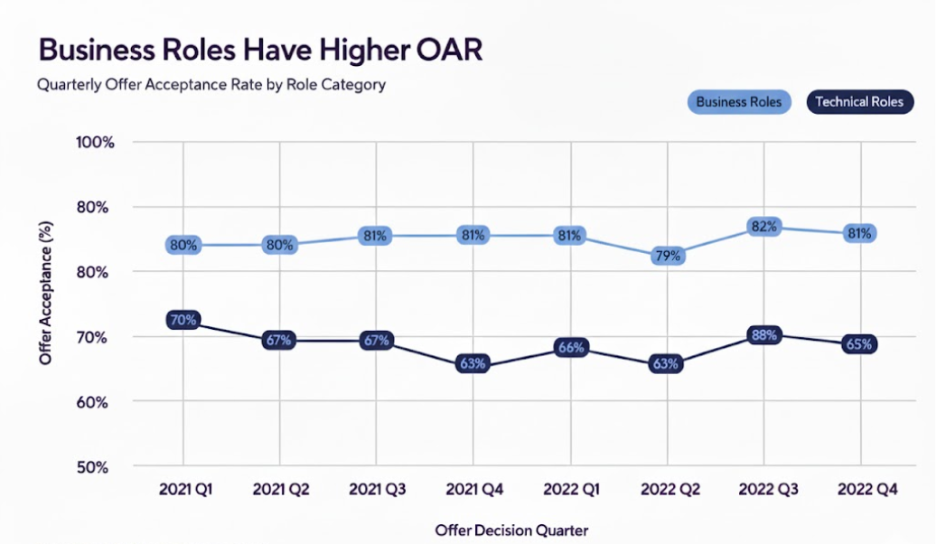
In 2023, business-function roles saw 84% offer acceptance, while technical roles hovered near 73%. Compensation leads, but it’s not alone.
When the interview process is jumbled or communication is sparse, 42% of candidates say they’ll decline the offer just on process experience. A lack of clarity around growth, flexibility, or role expectations also triggers “silent withdrawals.”
The Hidden Price of Dropouts
An offer that fails to convert is more than a lost candidate — it cascades. Reopening the job, reengaging prospects, re-running interviews: all of this drags on timelines and eats into team productivity.
Recruiters often estimate that the total cost of a dropout can exceed 1.5× the role’s monthly salary, once you factor in ramp-up delays, re-sourcing, and internal disruption.
Culturally, repeated dropouts degrade trust in the hiring process. They signal that recruiting lacks consistency, alignment, or rhythm. The trend becomes a symptom — not just of competition, but of operational fragility.
AI Tools: From Reactive to Predictive Recruiting
The era of manual follow-up is fading. Smart recruiters now lean on AI to anticipate, engage, and safeguard offers before they fall apart. Here’s how:
1. Predictive Modeling & Risk Scoring
Using historical data, market benchmarks, and real-time behavioral cues (response times, message tone, engagement cadence), AI can predict which candidates are at risk of reneging. Some organizations report 15% fewer offer dropouts after introducing these models.
These flags let recruiters prioritize outreach — for instance, stepping in with a more competitive counteroffer, customized communication, or faster next steps.
2. Automated & Instant Engagement
Ghosting often begins with silence. AI chatbots and messaging workflows can immediately answer candidate questions, push status updates, or prompt next steps at each stage. Keeping communication alive, especially between offer and start date, helps retain trust and momentum.
3. Personalized Communication
Not all candidates care about the same things. AI systems analyze profiles or historical data to tailor messaging — highlighting flexibility, growth, or mission as relevant. Candidates respond better when they feel seen, not mass-mailed.
4. Process Analytics & Bottleneck Detection
Dashboards powered by AI spotlight where candidates stall, drop off, or disengage. Is your longest wait time between interview and offer? Or between verbal acceptance and contract? These insights guide structural fixes. In some cases, hiring cycles have shrunk by 50% after fixing identified bottlenecks.
5. Intelligent Preboarding
The moment someone says “yes,” the real work begins. AI-driven preboarding systems deploy tailored content, manager videos, role previews, and timely reminders — maintaining emotional connection until Day One. This helps reduce first-day no-shows, which still haunt sectors like healthcare.
From Offers to Outcomes: A Mindset Shift
AI doesn’t replace recruiters — it augments them. It surfaces risk, enables smarter timing, and frees human energy for high-impact relationships. The recruiter of 2025 is not chasing ghosts — they are anticipating disengagement and nudging toward genuine commitment.
Think of the offer not as an endpoint, but as a hinge between decision and action. The better the engagement, the lower the friction — and the higher the chance of a successful hire.
In practice, this means:
- Sharing salary and benefits’ transparency upfront (68% of candidates say seeing pay in the listing boosts apply rates)
- Shrinking interview rounds
- Automating status updates
- Tracking drop-off by role, segment, and stage
- Designing preboarding experiences that reinforce belonging before Day One
By doing so, organizations start measuring hiring success not by offers sent, but by offers honored.
The offer dropout crisis isn’t a bug — it’s a signal that hiring has evolved. In the age of abundance, every candidate holds options, and every moment of silence is a chance to lose them.
AI gives us tools to see ahead, engage meaningfully, and close the gap between “Yes” and “Joined.” But the real turn comes when leadership treats hiring not just as speed, but as emotional resonance.
Stay tuned: In our next release, we’ll share benchmark datasets and a playbook for deploying predictive engagement at scale.