When AI Enhances Human Judgment for Better Complex Decision-Making in Recruitment
I’ve spent years watching hiring processes twist themselves into paradoxes. Companies talk about “finding the best people,” yet most still rely on spreadsheets, gut feelings, and a prayer that bias doesn’t win. Then came AI—promising precision, efficiency, and the end of human error.
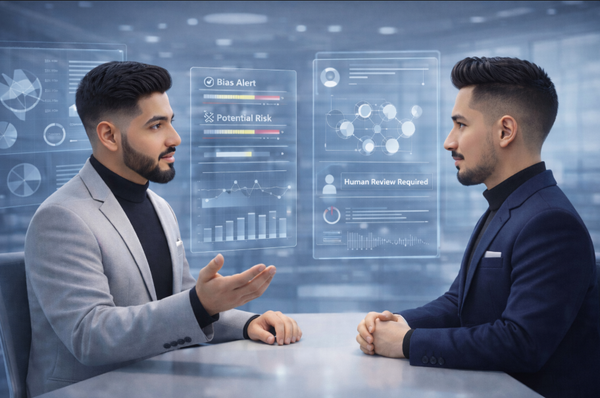
We now know better. The smartest organizations have learned that AI works best not when it replaces recruiters or hiring managers, but when it enhances them—making judgment more data-informed, consistent, and fair.
The hiring world is complicated. It deals in human potential, cultural fit, and future performance, none of which can be reduced to pure data. So when AI enters this space, it shouldn’t become the judge. It should become the lens that helps humans see better.
The False Promise of “Algorithmic Objectivity”
When AI first hit HR tech, everyone seemed eager to hand over the keys. “Let the model decide!” was the slogan. It didn’t take long for the cracks to show.
A 2024 Harvard Business Review study found that over 60% of HR leaders who deployed AI tools without human oversight later discovered skewed results—favoring specific schools, genders, or age brackets. The problem wasn’t AI itself; it was the belief that machines were immune to human flaws.
Recruitment is full of gray areas. A résumé might not reveal adaptability, empathy, or curiosity—the same way an algorithm can’t measure the spark in a conversation that makes you say, this person will thrive here.
AI can process millions of résumés in seconds, but it can’t read a pause in someone’s voice when they describe a project they loved. Humans can.
So, the goal shouldn’t be to erase bias by removing people. It should be to reduce bias by improving how people make decisions—and that’s where AI truly shines.
From Filtering to Amplifying Insight
Modern AI in hiring has evolved beyond keyword screening. The new wave of talent intelligence systems combines predictive analytics, behavioral modeling, and contextual matching to assist decision-makers at every stage.
A LinkedIn Talent Solutions report from 2025 shows that 79% of recruiters using AI tools report “better quality of shortlists” and 65% say it helps identify “non-obvious candidates” who might have been overlooked by traditional methods.
This is the shift from automation to augmentation. AI handles the data-heavy grunt work—surfacing insights on skill adjacencies, culture alignment, and potential growth paths—while recruiters use those insights to make more thoughtful, equitable calls.
Take Unilever’s case study: by blending AI-driven assessments with human interview panels, the company cut hiring time by 75% and increased diversity in early-career roles by 16%, as reported by Forbes. The tech didn’t replace recruiters; it freed them to focus on empathy and evaluation, not logistics.
When recruiters stop spending their days in scheduling chaos or keyword scanning, they get to do what they’re actually good at—reading people.
Complex Decisions Need Human Intuition
Hiring is one of the most complex decisions in business because it deals with uncertainty. You’re not selecting a skillset; you’re predicting future collaboration, motivation, and culture fit.
A Deloitte Human Capital Trends report found that 63% of organizations are now embedding AI tools into hiring but retain human review in all final evaluations. Why? Because data can’t capture ambition, self-awareness, or resilience—qualities that reveal themselves only in interaction.
AI can tell you who can do the job. Humans decide who will.
This balance becomes critical when stakes are high—executive roles, creative positions, or mission-driven teams. The data might say one candidate has stronger credentials, but intuition might pick the one who’ll challenge groupthink or bring empathy to a rigid culture.
That’s not anti-logic. It’s context. And context is what makes human judgment irreplaceable.
The Cognitive Upgrade: Recruiters as “Augmented Decision-Makers”
We talk a lot about “AI literacy,” but the next evolution is intuition literacy—the ability to know when to trust your gut and when to validate it with data.
A Gartner survey in 2025 found that HR teams using AI-assisted decision frameworks saw a 27% reduction in hiring bias and a 22% improvement in candidate retention after 12 months. The reason wasn’t better tech—it was better collaboration between human recruiters and AI systems.
Recruiters who used AI to question their instincts, rather than confirm them, made more accurate calls. It’s a humbling process: realizing that your favorite candidate isn’t always the best one, or that the quiet applicant might have the highest potential based on skill trajectory data.
AI makes intuition measurable. It surfaces the invisible patterns—like which combinations of experiences correlate with performance or which interview traits predict cultural harmony. But it’s the recruiter’s empathy and discernment that turn that information into a hiring decision worth trusting.
Building the Augmented Hiring Model
Through case studies across tech, finance, and healthcare, a clear framework is emerging for how AI and human judgment can co-own hiring decisions:
- AI for discovery. Use data to uncover hidden talent pools, transferable skills, and future potential.
- Humans for evaluation. Let trained interviewers interpret communication style, motivation, and emotional intelligence.
- AI for validation. Cross-check hiring patterns for bias, pay equity, and predictive performance.
- Humans for context. Align decisions with team chemistry, leadership philosophy, and organizational values.
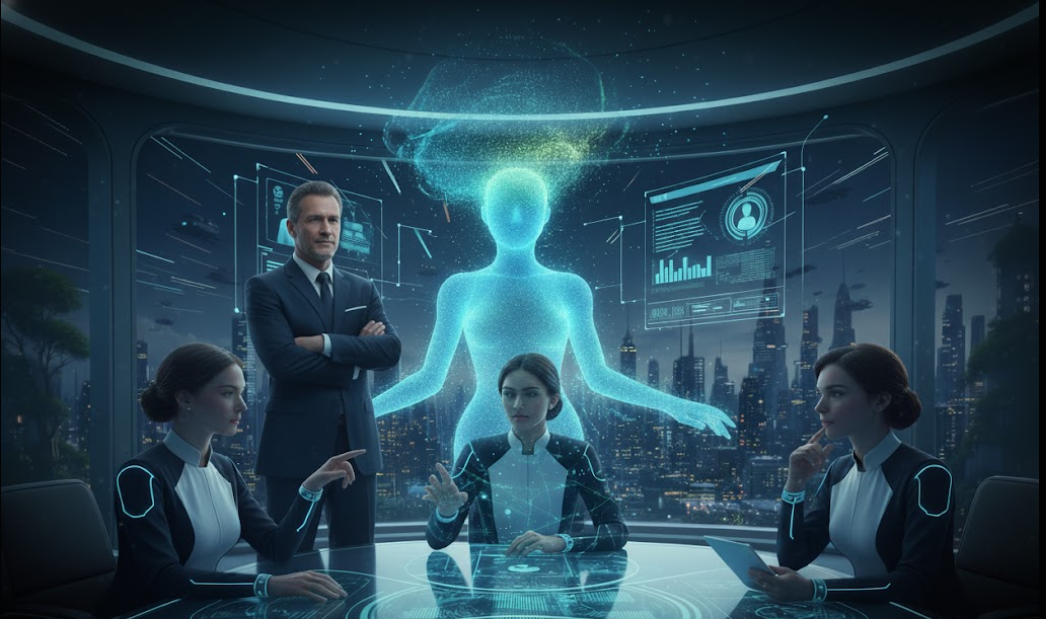
This model treats AI as a thinking partner, not a filter. It’s not just smarter—it’s fairer.
Companies like IBM and Accenture already run this model at scale, showing tangible gains in diversity, candidate experience, and long-term retention.
When AI Gets It Right, Everyone Wins
Recruitment powered by human-AI collaboration doesn’t just fill roles faster—it transforms how organizations understand talent.
- Speed: AI reduces time-to-hire by up to 70%, as shown in SHRM’s 2024 talent technology survey.
- Quality: Recruiters using AI-driven matching report 30% higher first-year performance rates among new hires.
- Fairness: AI-based bias detection tools flag language or decision inconsistencies invisible to the human eye.
But the biggest win isn’t efficiency—it’s confidence. Hiring managers feel more assured in their choices because their instincts are supported by evidence, not swayed by convenience.
As one CHRO told me during research, “AI doesn’t make the decision for us. It just makes sure we make it for the right reasons.”
The Future of Judgment in Hiring
Let’s be honest—AI isn’t going away. The recruiters who thrive in the next decade won’t be those who fear losing control, but those who master co-decision. They’ll learn to interrogate data with empathy, and to use AI not as a crutch but as a compass.
The new recruiter isn’t a résumé sorter or interview scheduler. They’re an augmented strategist—someone who fuses insight and intuition to build not just a team, but a culture.
The more we let AI handle the noise, the more space we create for distinctly human skills: curiosity, storytelling, discernment, and courage.
And that’s the irony. The more intelligent our systems become, the more vital human judgment will be.